

Today's Business Highlight: Scott Carl

My last musician highlight is someone I would describe as a hidden gem. Scott Carl doesn’t advertise himself the same way many of today’s local musicians do; however, his music is what many of us need in our lives.
His music is not only filled with hope and understanding, but also feels like a guide on how to live life. It feels like a beacon of hope at a time when so many of us are struggling and living day to day, or sometimes what feels like hour to hour.

I really hope you take the time to listen to his music. Although you can only find most of it on Facebook, it’s amazing music that deserves to be shared and that I think more people should know about. He also hosts open mics and performs throughout the Lehigh Valley, Hamburg, and Kutztown, giving people the opportunity to experience his music in person as well as uplifting those that would like to work on their craft.
Having a conversation with Scott was a great experience, and I would like to invite you to join that conversation. I hope that through his words and his music, you can feel some of the same calm that I felt while speaking with him.
Business Information:
Scott Carl
Email: scarl19539@icloud.com
Facebook: https://www.facebook.com/scott.carl.587/
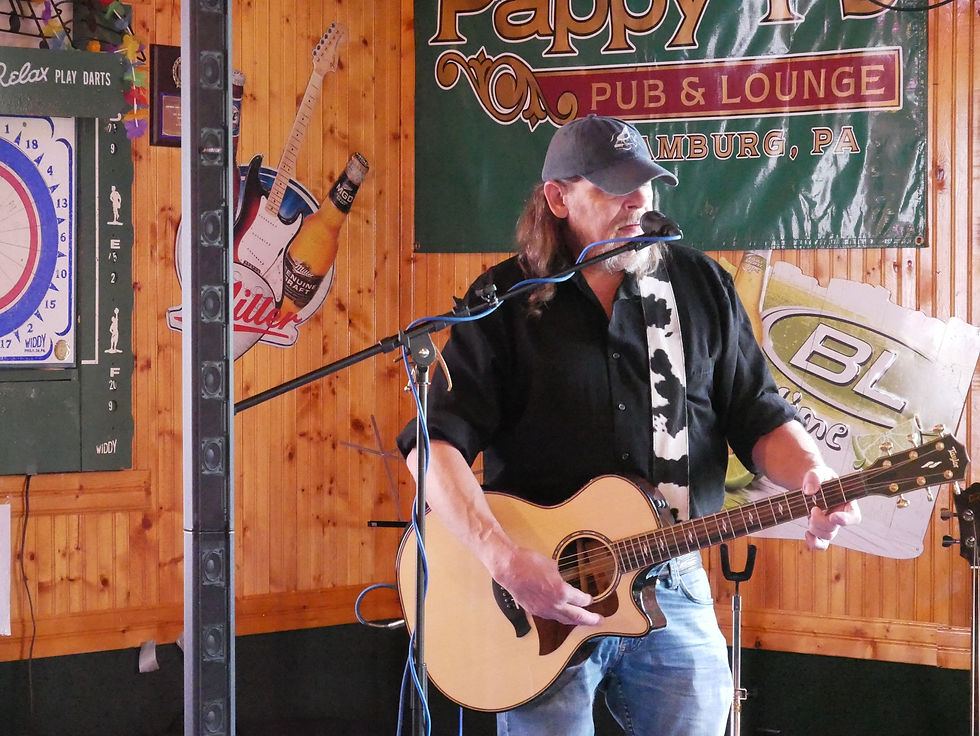
Open Mics: Second & fourth Sundays at Pappy T’s in Hamburg, PA
Also Performs At: Kutztown Beneficial Association, Blue Mountain Ski Area, and Macungie Pub
Meet Scott Carl: A Hidden Gem in the Local Music Scene & A lifetime of Music

Rosa: So we're going to get started right away. Can you tell me a little bit about yourself? And how did music first become part of your life?
Scott: Let's see. First part of my life, I guess, was entering the band in elementary school.
Rosa: Wow.
Scott: And then I chose an instrument. I played through high school, and even after high school, I played some trombone. I was playing bass guitar probably right out of high school, or during my senior year. I think I started to pick that up around then. In between,
I played some acoustic guitar. When I was younger, my sister had one, and I grabbed it. It was a rotten, cheap guitar. It was tough to play, but I learned some chords.
There was also music in my family. My second cousin played, and we used to get together for picnics. The old timers would sit and play, and I learned to follow along and switch chords. So it kind of progressed from there. I was just always in bands, mostly playing bass, and eventually decided to take a break and do my own thing. I had all these songs that I write, so I always wanted to show off my creativity as an artist.
It's fun. It's just fun. And people pay me to do that.
Rosa: You come from a long line of musicians, in a way. Even if they didn't do it as their main job, it's something your family has always done, because you said the old timers used to play and you guys used to play together.
Scott: Yeah, my great uncle and his friends used to sit and play for hours. Acoustically, it was a fiddle and a steel-body guitar, and they had a lot of fun together over the years. I ended up in bluegrass shortly after because they needed a bass player.
Rosa: I could hear that in your music too. So basically, music has never been a hobby. It's been a part of your identity since the beginning.
Scott: I guess. In school, I didn't play at home when I was playing the trombone. Then I dug it out years later and incorporated it into a couple of bands I was with. And now it's been put to rest.
Rosa: But you got that knowledge and education from it, I bet. More formal education with the trombone than you did with the other instruments.
Scott: I didn't take the theory very well. I sight-read music, and it got me through. I did very well by ear, and that's how I learned it that year.
Rosa: So how would you say your original music has evolved throughout the years?

Scott: I guess, like most people, life experiences get written down with ideas and then incorporated into something the general audience would want to hear. I try to connect with people. There's a story in everything. So that's the joy of finding people that really enjoy it and can relate to it.
It comes from the soul, comes from the heart. It's not me reading. I don't go out with an iPad in front of me and read the words while I'm singing. It's all from within. And if I'm in a bad mood, it takes me right out of the bad mood. I don't know if you've ever heard anybody say it, but playing music or singing can also take away pain.
Rosa: Yes, I feel that, and it's a passion that's true to all musicians who take the craft seriously. So what keeps you motivated to continue creating?
Scott: Trying to create something that, as I would say, is equal to one of the greatest songs ever written. I would like to create that. Back in the day when there were vinyl records, you had an A-side and a B-side. All the stuff you heard on the radio, for the most part, was on the A-side. When you flipped it over, you got songs that you never heard. According to the record industry, they weren't top sellers, so they put them on the B-side, what they called filler songs that weren't created to be the number one hit.
All writers have numerous songs that just aren't as good as others. I try to incorporate words that'll connect with people, and I'm still determined to try and write that number one, ultimate song that people will just want to hear.
Rosa: That's awesome.
Scott: Not a chance, probably, but—
Rosa: You never know. We talked about how you've evolved through the years through your experiences. If somebody were to listen to your earliest songs versus your newer songs, what differences would they notice?
Writing From the Heart

Scott: Some changes. The newer songs are probably better written all the way around. The work comes together much better than the early songs.
The tough thing for me is, when I was playing bass, I would take a song that I played on acoustic guitar, incorporate it into a band, and play bass for it. Just the other day, I was listening to some old recordings with the band and didn't even realize one of my songs had a surf-rock beat. It was crazy because I don't remember ever playing that song that way, and it came off totally different.
In the earlier days, when I had my song being sung and played in a band, it took on a whole new sound or style from what I would do acoustically. I can't get that electric sound and crunch without drums and all that. It's just interesting when I listen back. Did I do that? Wait, that wasn't me.
My second cousin and I played in a bluegrass band for years, and one day he came up and said, "Play this song." He said the title, and I said, "I don't know that song." He said, "You should. You wrote it." I totally forgot I wrote it, and then I had to ask him, "How does it go?"
My memory is not always like that. I do have several songs that are quick-paced with a lot of words, some of my own and some others. Like I said, I don't go out and read music while I'm playing, so it's all memory. I hope to get a little sharper at that as I go.
Rosa: Honestly, that's very normal because if you've been doing it all your life, you have so much music in your brain. It's kind of hard to keep every single lyric and notes, you know? So that makes sense to me.
So what does your songwriting process look like? Does it begin with the lyrics, the melody, the riff, or something totally different? How is a song born when it comes to you? When you're writing it, do you start with the melody or do you start with the lyrics?
Scott: Usually the lyrics come, and I either have to hit the video button on my phone so I can record it and save some things. I used to write it down, and I have more words than actual songs because so many ideas come to me. Maybe something rhymes or just has meaning, and I jot it down somehow and try to get back to it. Then I'll find a melody for it.
The melody sometimes comes from just doodling. Sometimes I hear something and decide to put the words to it. But yeah, the writing comes first most of the time.
Rosa: So the lyrics guide the music in a way.

Scott: Yeah.
Rosa: I did see that because I went through your Facebook. I couldn't find your YouTube, but I found your Facebook, you sent me the link. I saw that it's very much storytelling. With each song, I could picture every scene in my brain when you were singing. But we'll get into those songs a little bit later.
How do you know when a song is finished? When you're writing it, how can you tell, "Okay, this is the perfect ending"? Is it all feeling?
Scott: I would say verse, chorus in a song. Because I don't have another party playing along, I don't have solo time and space in between. But pretty much however long the verses go. Basically, three or four verses is about it, and then I'll be ready to end the song after the chorus.
One of the things I've been doing, since I played for somebody else who used to do this, is instead of repeating the end twice, sometimes I do it three times. That's where you know it's going to end.
The three times are for the Father, the Son, and the Holy Ghost. They say good things come in threes, so I do a lot of three-time repeats at the end. Not always.
Rosa: Last question about the songwriting process: Have you ever written a song that surprised you once it was completed?
Scott: Sure. Yeah, absolutely. Like one that took me an entire night to write and record.
Rosa: What was the song? Do you remember?

Scott: It's called "Fun Is Not a Four-Letter Word."
Rosa: You know, I didn't listen to that one.
Scott: It was fast-paced, and I was amazed that I got that done in one sitting. It took a long time, but—
Rosa: You got the writing and the recording, everything, in one sitting?
Scott: Well, it was from dark to dawn. I finished it when the sun came up. Sometimes I write and it's like writer's block. Sometimes you just can't get the right words to come, and you have to get away from it and go back to it.
Rosa: But you were determined.
Scott: Oh, yeah. I had a promoter at the time that I was working with, and I told him that I was going to write that song. It just started as a phrase, and I took the phrase and rolled with it. I said, "I will do this tonight," and I did. So I can work under pressure, definitely.
Finding Hope in the Ordinary
Rosa: Oh my goodness. Okay, so let's talk about the themes in your music. When I was listening to it, it felt very hopeful, there were themes of gratitude, belonging, slowing down, self-reflection, and finding the beauty in ordinary life. Are those themes intentional, or did they naturally emerge in your writing?
Scott: Everything is intentional. It's a thought that I like to share with others. Nothing I've written has any evil connotation or anything negative. The world's full of negatives. People go out and want to hear music. They don't want to hear talking, and the words behind the music should be an uplifting thing, not like a machine pounding away all day. I try to make things uplifting that people can relate to and feel good about. Yes, definitely.
Like kids, you ever have an audience and there are no kids, and you start cursing in your songs, and then a child walks through the door? Then how do you feel? I feel bad. So I try to appeal to everyone.
Rosa: When I was listening to your music, there was a lot about appreciating the ordinary moments, especially in "Chasing Rainbows." What makes you interested in talking about ordinary moments? Is it the connection with the people who listen to your music?
For example, my favorite song of yours was "Take a Trip." It felt like it was inspired by something real, but then there was a broader message to it.
Scott: It was about taking LSD.
Rosa: Oh, okay. Me thinking, wow, "Take a Trip"
Scott: And just having a happy space to do it in. It wouldn't be in front of anybody. Just lock yourself in a room.
Rosa: Not leaving the barn…
Scott: Lock yourself in and just have fun with it, but don't involve anybody else on the outside. I thought about that as I got older. You get older, you start a family, and you're not doing the same things you used to do when you were younger. So I was thinking, what would it be like to do that again? But I'd have to shut out the world to enjoy it. That's what that was about. It was just a crazy thing.

Rosa: Okay. I even listened to "Buttercup," and that's what I got from that too. You're appreciating this person, I don't know if it's your partner, but you're appreciating this person. Or "You're Not Half Bad" - I loved it. That was a great song.
And your musicality, even though you say you're not professionally trained with the guitar and all of that, it has a great melody to it. It's like when we spoke in the beginning, where the lyrics really carry the rest. The music accompanies your storytelling, which, I mean, bluegrass is a lot of that, right? And blues as well. Just regular blues.
Scott: Blues is bluegrass, just a hundred times slower.
Rosa: Oh, there you go. That's true.
Scott: I went from playing bluegrass years ago to playing blues, and I didn't know blues very well. Most blues radio I had ever heard was slow and predictable. But I was introduced to playing in a blues band years ago, and I didn't know the first thing about it. I started listening to it, and I had to learn songs because nobody else sang. So from scratch, I had to learn all these blues songs.
I was approached with, "Can you play blues?" I said, "I guess it's a hundred times slower than bluegrass." And it is. Bluegrass is blues, but kicked up a notch, and a lot of the timing is blues-based.
Rosa: So is there a musician or a time period in music that influences your music the most?
Scott: Bluegrass.
Rosa: What about a specific musician? Is there someone who influences you the most?
Scott: I don't know. It's a compilation of so many different bands I've been with over the years and so many great times. Festivals were some of my favorites. I've been in front of large audiences in my lifetime, traveled, and rode the bus. It's a really fun thing to do. We were really close to eating and sleeping the music as a band.
The interesting thing, too, is we used to rehearse twice a week, not once a week, twice a week. We got so much better with each other. You knew, from the moment the song started to the moment it ended, everybody was on the same page. We started strong, we ended our songs strong, and everything clicked. The timing and solos were right where they were supposed to be. Everything was very professional back then.
I always look for that in bands, too. If I ever got involved with somebody else again, I'd want the players around me to be decent.
Rosa: Locked in, too. I guess if you play together that long or that much, you learn how to read each other's minds a little bit. The feeling is almost like another character in the band, right?
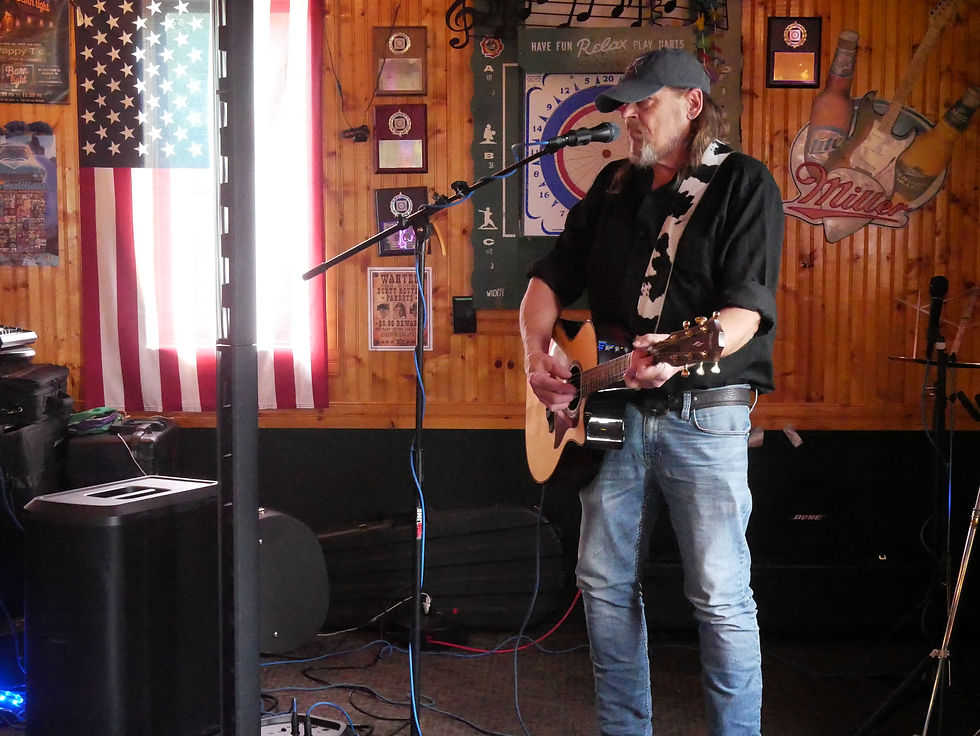
Scott: Yeah. You know what the next guy's going to do before he does it. You know what they're thinking or what they're going to throw in, and everything comes together nicely.
I also enjoy the open mic because there are so many good players and so many people who want to get better. I strive to give them the spotlight, give them the microphone, and help them. Over the years, I've seen people come to my open mics and they're struggling a little bit. You can tell they're struggling to do this in front of an audience. Not everybody can do it. It makes you nervous.
But I've seen people come to my open mics over the years, I had one that ran for years and another that ran for three and a half years, and some of these people come back and it's like night and day. They're incredible. What they've learned and how far they've gotten, they've progressed.
I always say, you can go out and hear a band and they sound lousy to you. Maybe somebody else really likes them, but encourage them because they're only going to get better if you do. You can't say, "You don't sound so good. Maybe you should hang it up." I would never tell somebody that.
Give them the space to grow. I also like putting a microphone up and watching musicians' faces when they get behind it and realize that they sound really good because of the quality of the sound. I love helping people sound as good as they can. You can see it in their faces when they're comfortable and they don't want to get off the chair. They want to stay and play. That's a good thing
.
Original Music in a Cover-Band World
Rosa: So let's talk about "Chasing Rainbows," since you told me that was your favorite song. I listened to a few different versions of it. One you called "Chasing Rainbows in the Dark." It was completely dark.
Scott: I came back to the house that I used to own. It was vacant. I went back there after my open mic, grabbed my guitar, and went into a root cellar that we had underground. I put my phone on the ledge, and I didn't realize I couldn't have any light. I was videoing myself, and it was completely dark down there. That's why I said, "Chasing Rainbows in the Dark."
I played it in the dark and sang it in the dark. I realized it wasn't as good as I'd like it to be, but I snuck in. I wasn't the owner of the house anymore, but nobody lived in it yet. So that was a bit of a story for that one.
Rosa: You have several videos of that song. My favorite one was the one with the harmonica in the background. When I was listening to it, I could hear the water. Did you guys add that, or was that just the natural sound of the water behind you?
Scott: That was all natural. John was there that day. He was fishing because he likes to fish. I stopped by and fished for a little bit, and I asked him if he had his harmonicas with him. He went and got it, and I grabbed the guitar, and we just sat and played.
It wasn't something we planned. It was just spur of the moment. I said, "Hey, why don't we make a video?" I set up the tripod I had, and that was all natural. There was no amplification or anything.
Rosa: Well, I loved it.

Scott: From a phone, it turned out pretty good.
Rosa: Yeah, I agree. So what makes this song so special to you? When I asked you to pick a song so I could really listen to your music, you picked "Chasing Rainbows." I really want to know why, out of all the songs you've written.
Scott: I don't know. To me, it's just a good feeling. A way simpler time. We all could stand to kick back one day, where things are simple and you don't need to worry about all the busyness, bills, and all that.
I wrote that when I was laid up in bed. I had a foot operation, and I was lying in bed watching TV. There was a Western on, and that's when I picked up the guitar and wrote it. It just reminded me of a simpler time, the people on the stagecoach and all that.
Rosa: So a time without electronics, basically.
Scott: Yeah. Just the Wild West. It seemed like they had simpler times, not all the worries we have today. Don't let anybody tell you that you can't do what you want to do in life. That was the message.

Rosa: That was actually my next question, so you answered it. Perfect. You also talked about, "Why can't we all just learn to get along?" And the idea of finding where you belong seems to be a very big theme in the song. How important do you think that is, even within music or the local scene? How important is learning where you belong?
Scott: Very important to me. Where I'm at right now, there are neighbors that just walk the other way when you say hello. I'm thinking, okay, to each their own. If they want to be by themselves and not socialize, that's okay. But there are also places where the neighbors just don't get along.
You can rub somebody the wrong way really easily today, even if you don't mean it. There are tensions and arguments, and we all should learn to get along.
I have a good friend in Tennessee, right outside of Nashville. He does podcast stuff, and at the end of his show he always says, "Remember, be better to your neighbors and you'll have better neighbors."
Rosa: Honestly, that's very nice.
Scott: And you'll have better neighbors. Treat each other the way you want to be treated, basically.
Open Mics, Community & Helping Musicians Grow
Rosa: So, "Take a Trip,” we already spoke about it. You answered my questions about what the song was about. So let's talk about the local music scene. What is the local scene like from your perspective?
Scott: From my perspective, I don't think it's as focused on the music as it could be. There are a lot of bands out there, hundreds in the Lehigh Valley and thousands across the state. But there are so many venues that are geared toward cover bands and less toward original music.
I prefer to play my originals. I do other people's music as well, but I like to connect with an audience. For some reason, either people don't like people's originals very much, and some bands don't write good songs, admittedly. I've heard that over the years. But there's no real outlet for it in the Valley.
You can go to an open mic and play anything you want, so originals are okay. It's a different kind of audience at an open mic. And certainly with karaoke, everybody sings other people's songs. There's no original karaoke.
Cover bands are overwhelming in the area. I've always said, if what you want to do is copy somebody else, that's great. I prefer to be creative as an artist and write and perform my own songs because it's sharing a piece of me, rather than, "How well can I match this guy's bassline or guitar work?" And then if you do things originally and you mess up, nobody knows.

Rosa: Right. They don't know the song.
Scott: There are places to play in the Valley: solo, duo, trio, full band. There are places. There aren't as many big halls as there used to be.
The other thing I get discouraged about sometimes is places that will hire music, but the TVs will be on in the bar all the time. It's distracting to me. If their main crowd or clientele is sports-minded, then why are they dragging music into the mix where nobody is really appreciating it, or doesn't show it?
If you go to play at a winery, it's a totally different atmosphere. People might be talking, but there are no TVs. Everybody's there for the music.
So I think the showcasing of musical talent is better seen at the open mics. For anybody who's a solo artist or original artist, that's where you're going to find it. Coffee shops used to host light-fare music. If you're on a stage at a park or something, that's okay too, but they're all cover bands as well.
Rosa: Do you feel like, as an artist who plays original music, you kind of have to fight for your place within the Lehigh Valley music scene?
Scott: Pretty much. I'm not saying I don't get hired at places. I do, and some very nice places. But there's just a difference between the bar, the coffee shop, and the winery, or even breweries. There are a lot of those that have popped up.

Rosa: There's a lot.
Scott: I particularly enjoy playing to a new audience and at a new venue anytime because I never know what it's going to be like. I don't know how it's going to turn out for anybody, myself or everybody else. A new set of ears to hear my stuff is always welcome.
It's always a law of averages, no matter what you do in life. I've learned even an idea has to be sold. Even an idea has to be sold for somebody to buy it or buy into it. Somebody has to sell that idea to you. So the more ears that hear the music, the better.
It's like sales. If you want to sell one, you've got to solicit a hundred.
Connecting with An Audience & Performaces That Stay with You
Rosa: So what do you enjoy the most about connecting with audiences, especially when you're playing your original music and, like you said, sharing that part of yourself?
Scott: Anytime somebody says they really enjoyed a song, or even sometimes just the fact that they clap for one of my songs they've never heard before. To me, clapping is instant gratification. Applause is instant gratification. It's like a pat on the back from a boss saying, "Good job. Well done."
Some audiences are either too busy talking, they're not paying attention, or they're not there for the music, and you don't get the applause. I'm not going to ask for it.
Rosa: What is a particular performance that stands out in your memory? Where was your favorite place that you ever performed?
Scott: That would be the International Bluegrass Music Association gathering in Owensboro, Kentucky, next to the Ohio River. It was a huge stage, and Alison Krauss was on that day, the same stage.
We were there at a trade show for the week, and we couldn't get into the Showcase Lounge. They were all full up that year. So we were asked to play on the main stage outside for the festival because somebody canceled. It was like being on a football field. It was such a big stage. There were four guys, and we were used to standing much closer, so that was probably one of my highlights. It was a place where I wasn't plugged into a cord. I had a wireless on my bass, and I could strut around on stage, and I did.
Rosa: Oh, that's awesome! Wow.
Scott: There was so much room to play around. The sound was Rosewood out of New York, and it was the best sound I ever played through. That makes a world of difference as a player. The sound you hear has to be happy to your ears, or you're not going to make other people happy. It has to sound good to you.
Rosa: Yeah. You are the most important fan to yourself, right? You are number one and must always be number one to your own music. That's what makes people authentic, in my opinion.
Scott: It's like when a nail breaks and I'm strumming. There comes a sound that I don't like, and I take care of it. It's happened. Whenever you get to play behind another person's sound equipment, it's never as good as you're used to, not usually as good.
The Roxy Theatre was another great time that I got to play solo acoustic. Unfortunately, a good friend of mine passed away recently, and he had set me up to play at the Roxy. That was nice.
Rosa: That's cool. Is there a dream venue in the Lehigh Valley that you would love to play at, or have you played them all?
Scott: I've played over fifty in the past, probably more now. I counted over fifty years ago. There isn't really any place I'm dead set on wanting to be at in the Valley.
I should say, I've solicited ArtsQuest many times in Bethlehem, and I've played with four different bands at Musikfest in my lifetime. I've been to all the music awards over the years and won awards with bands, and I can't get my foot in the door to go down there and play.
So that would be one place I would enjoy: the SteelStacks. Even Musikfest would be fun. I haven't gone more than once or twice without playing over the years. It's just a great audience there. But other than that, I'm not actually in the area right now.
Rosa: Oh yeah? Where are you right now?
Scott: I can't tell.
Rosa: Okay, no worries.
Scott: I'm about an hour and a half away from the Lehigh Valley. It's just being displaced. Trying to find a home is tough.
Rosa: Yeah, honestly, this area is getting worse and worse every time.
Scott: But we're transitioning.
Where to Hear Scott Carl
Rosa: Right. So where can people listen to your music?
Scott: You can go on Facebook under my name and page through my videos like you have.
Rosa: So let's remind people of the name to search.
Scott: Scott Carl, C-A-R-L.
Rosa: Okay. Where else, or is Facebook your main source for putting your music out?
Scott: Yeah. I don't have much on YouTube at all. Facebook is how I do my business mostly.
Now I'm starting to book in a different area, closer to where I'm at, but I still have the open mic on the second and fourth Sunday of the month. That's at Pappy T's in Hamburg, across from Cabela's.
I have a few jobs coming up at the Kutztown Beneficial Association, which is downstairs at the fire company in Kutztown on Noble Street. I also have Blue Mountain Ski Area in Palmerton. I'll be up there, I think. And the Macungie Pub is another good spot. I love playing there, particularly because there are kids around. It's always fun watching kids and their interest in music.
Rosa: What's the best way to contact you if anyone is interested in hiring you, or if an event planner wants to get in contact with you?
Scott: Either through instant messenger on Facebook or email.
Rosa: Can you remind us what your email is?
Scott: My email is scarl19539@icloud.com.
Rosa: Awesome. Well, Scott Carl, you have two first names.
Scott: I have three first names.
Rosa: Oh my goodness.
Scott: My parents gave us a middle name that they thought we could use for a professional name, and I never chose to do it. I just chose to stick with my name, stupidly thinking that maybe my high school alumni would come out and see me.
I've been in different bands over the years, but those people never knew which bands I was in or what was going on. When I started playing solo under my name, that's why I chose to stick with Scott Carl. I thought, well, it's easy enough. It's not a long, drawn-out name.
Rosa: And it's unique. Not that many people have two first names as their full name, so it's easy to remember too.
Well, Scott Carl, do you have any questions for me?
Scott: What brought you to me and my music? What's that about?
Rosa: You want to know why I'm doing this?
Scott: Yes. Somebody knows you, right? I don't know.

Rosa: The reason why I'm doing this is because I decided to just do cool things, and I think this is cool. I started in December and just picked random businesses. Then I thought it would be super cool to pick themes too and make seasons.
Season two was about mental health and the postpartum period for women. Then I thought, you know, I really love music. Let me see what the music scene is doing out there. So I said, season three: local musicians, original music only. I'm tired of listening to cover bands, and that's why I decided to do this.
The next one will be about chronic illness. I contacted two different people or businesses that work with chronic illness, so that will be the next one.
But you're the last musician that I got the pleasure to interview. I think each individual brings such a different take on not just original music, but also the local scene and how you guys connect with your public.

I would say the theme between the other musicians that I had the pleasure to interview is hope, which is so cool, especially because it's something that we need right now.
I do consider musicians to be a business. You eat from your art, and everybody who has a passion usually turns that into their job. So I do find musicians to be a corporation all their own. They also need that spotlight. It's so expensive to market yourself, and I know how difficult it is.
Scott: And marketing and all that. I don't reach out too often to things I hear about or people who reach out on Facebook wanting to help musicians because they always want money. I learned a long time ago, I'm not paying to play.
Rosa: No.
Scott: If it's a charity or an organization that's a benefit, I will gladly play and not accept any money. But other than that, it's been a good part of my life. I've been doing it since the late seventies.
It's just something where you think, okay, if my music was on canvas, like an artist who painted, my paintings could potentially be sitting in a bin with a hundred other paintings sandwiched together. You walk into an art store and you see this, and that's the starving artist because his painting isn't being displayed and nobody's publicizing it.
There's a whole lifetime of creating. To me, it's about creativity. I created this stuff over a lifetime, and I should get something for it, I think.
Rosa: Of course. One hundred percent. It's a lot of work.
Scott: Just like a painting. You have to put yourself in those places too. I get it. I don't go out with a big banner behind me. I don't have all the lights and the glitz. I basically want people to enjoy the music.
Rosa: I mean, it's a part of you, and it's important to, like you said, feel that gratification of the applause. That's half the money right there.
Oh my goodness. Well, Scott Carl, it was a pleasure to speak with you. I had a great time.
Scott: Meeting of the minds. I'll see you on the 28th.
Rosa: I'll see you then. I'm very excited. I have my camera, two cameras, one for photos and one for video. I'll send it all to you. You can use it however you like. No payment. You can distribute it however you like, edit it however you like. I'm not doing this for money. I'm doing this because I think it's cool, and that's it.
Scott: Well, the 28th is a good-sounding room, I will tell you that. It is a good-sounding room, and it's wide open. I like that too.
Rosa: I'm excited. Well, I'll let you go, and we'll keep in touch through email and everything.
Scott: Yes. Okay.
Rosa: Sounds good. Have a good day.
Scott: Have a super freaking awesome day.
Rosa: Take care. Bye-bye.
Supporting Scott Carl Means Supporting Original Music, Community, and the Artists Who Keep Showing Up.
As the final musician featured in Season Three of Business Highlight, I had the opportunity to sit down with singer-songwriter Scott Carl, an artist whose lifetime in music has given him a perspective that feels both refreshingly simple and deeply meaningful. Scott’s music is filled with hope, gratitude, belonging, and reminders to slow down and appreciate the ordinary moments of life.
Throughout our conversation, we explored his journey from playing trombone as a young musician to performing bluegrass, blues, and eventually stepping out on his own as a singer-songwriter. We talked about his songwriting process, the meaning behind songs like Chasing Rainbows, his experiences performing throughout the years, and the challenges original musicians face in a local scene where cover bands often receive more opportunities.
But one of the things that stood out to me most about Scott was his commitment to giving other musicians a place to grow. Through the open mics he hosts, Scott isn't only performing his own music, he is creating space for other artists to get behind a microphone, become more comfortable in front of an audience, and experience that moment when people stop and listen.
As we close this season of Business Highlight, I hope you don't just read Scott's story. Go experience the community he's helping create. Attend one of his open mics, listen to the musicians who get up to perform, applaud the person who may still be finding their confidence, and take the time to listen to Scott's original music.
Season Three has been about original musicians, but it has also been about the people and places that allow original music to exist. Supporting artists like Scott and showing up for spaces like his open mics, is one small way we can make sure local music continues to have a place in our community.
Business Information:
Scott Carl
Email: scarl19539@icloud.com
Facebook: https://www.facebook.com/scott.carl.587/
Open Mics: Second & fourth Sundays at Pappy T’s in Hamburg, PA
Also Performs At: Kutztown Beneficial Association, Blue Mountain Ski Area, and Macungie Pub


Berkshire Hathaway HomeServices
Fox & Roach Realtors
Pennsylvania
3465 Nazareth Rd., Suite 103, Easton, PA 18045
484-274-8696 - Cell
610-258-0808 - Phone
610-258-7699 - Fax

Fox & Roach Realtors
New Jersey
54 Old Hwy 22, Clinton, NJ 088089
484-274-8696 - Cell
908-735-9700 - Phone


Comments