

Today's Business Highlight: Little Cali
- rosajaviersales
- Feb 22
- 13 min read
Updated: Mar 4


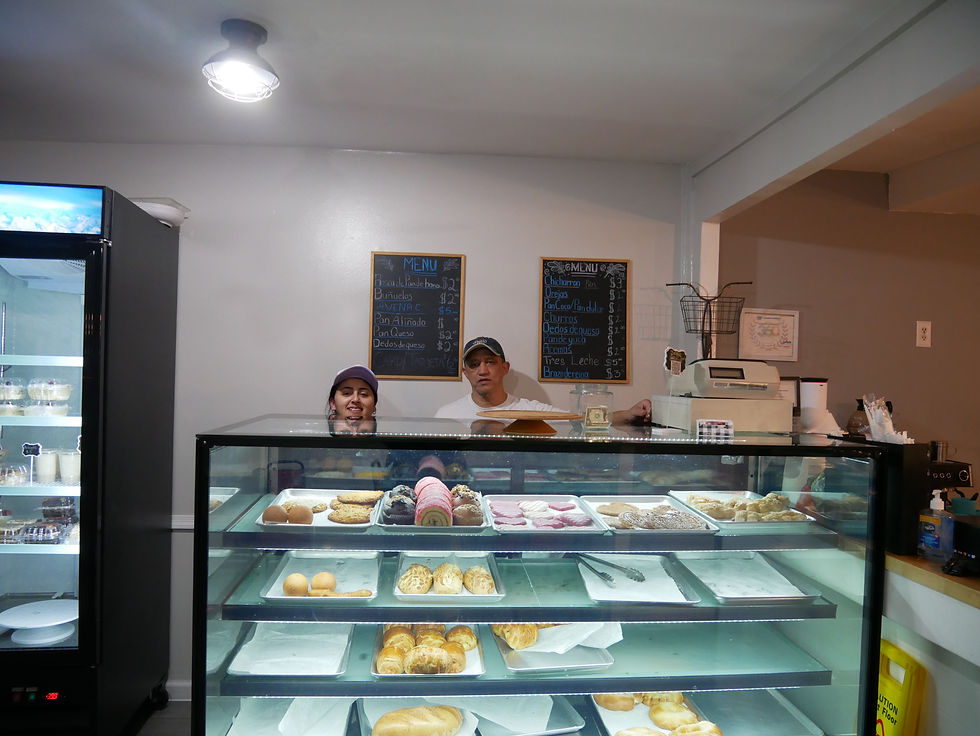
January 19th was another snowy night in Easton, and while the West Ward streets were quiet and covered in snow, the kitchen inside Little Cali was alive with Jennifer and Manuel Rendon working dough, stove was on: empanadas and milhojas were being made. I stood between Jennifer and Manuel Rendon beside the stove watching their take on their Colombian heritage.

While we were speaking, Jennifer was pressing freshly ground corn masa between her palms, explaining how the maize was cooked, milled, and transformed into their famous empanadas. Across the kitchen, Manuel, with more than 35 years in Colombian panaderia (baking), he layered dulce de leche into a milhoja. We spoke for over thirty minutes about their love and passion for their craft, and how it was more than food, but heritage.

By the end of the night, I was holding a corn empanada Jennifer had fried just for me, it was golden and crunchy- unmistakably authentic. Manuel sent me home with pandebonos that didn’t last long once my family tasted them.
Come sit with us! Let’s talk, eat, and travel – all without leaving Easton’s West Ward.

Business Information:
Name: Little Cali
Address: 1029 Butler St, Easton, PA 18042
Phone: 610-232-7357
Email: littlecali290@gmail.com
Transcription of Conversation (Interview completed in Spanish - this is the translation)
In the Kitchen: Empanaditas from Scratch
Rosa: So, can you tell me what you’re making right now?
Jennifer: Yes—these are little beef empanadas. The process is: we start with corn. We cook it properly—this is cracked corn (maíz trillado). Once it’s cooked and looks like this, we grind it so we can prepare the dough. And then you end up with dough like this, ready to form the empanadas. This is a typical Colombian empanada, and right now I’m making the beef ones. We make them with shredded beef, cooked potato—and over here I also have the potato and chicken filling ready.
New Management at Little Cali
Rosa: Perfect. And are you from Cali, Colombia?
Jennifer: I was born in Valle del Cauca, but I grew up in Marinilla, Antioquia. My father was from Palmira (Valle), and after a few years they took me to Marinilla, Antioquia—so that’s where I grew up. I’m a mix of both.
Rosa: A mix of both. When did Little Cali’s management change? It used to be someone else before, right?
Jennifer: Yes, the owner is Heidy. At the present moment she is still the owner of the name, "Little Cali," but the administration now has been passed down to me.
Rosa: Okay!
Jennifer: And I started here this month—February 1st is when I officially began running things at Little Cali.
The Corn Comes First
Rosa: Wow. Why did you want to do this here in Easton—bring your culture here?
Jennifer: Because I believe—and I see and feel—that what’s missing here is the truly original Colombian culture, especially typical Colombian food. That’s what I want to bring: a truly authentic empanadita. The foods we make for lunch—soups, a main plate, a drink—at a comfortable price, but also in a way that leaves people satisfied and lets them taste that Colombian flavor—and my love.
Rosa: Perfect. Okay—back to the empanada. You said corn comes first, right?
Jennifer: Yes, correct. First we cook the corn, and then we grind it.
Rosa: Okay.
Jennifer: And then we make the dough. This has a shape and a method so it comes out with its color, its flavor—everything. And then you shape it like this.
Rosa: And in Colombia—when do people eat this empanada?
Jennifer: Honestly, all the time—at breakfast, during “traguitos” (a snack), mid-morning. In Colombia there are people on street corners making empanaditas and frying them in oil—sometimes even over wood fires. You can buy them on the street, in restaurants, in bakeries—everywhere. This is one of the most typical, typical, typical foods in Colombia: the empanadita.
Rosa: And here, do you make them all day?
Jennifer: Yes. I try to have arepas and empanadas every day. And our arepas are 100% corn too. I’m always making them. I can never run out of corn, because there always has to be empanadas and arepitas—at all times.
Rosa: And you make them beef—what else?
Jennifer: These are beef, but now I’m going to make chicken. They’re shaped a little differently.
Rosa: Oh, okay—so they’re not made the same.
Jennifer: Not the corn ones. But we also have flour empanadas—those can be cheese with beef, chicken with beef, and so on.
It's Heritage
Rosa: Why did you and your uncle decide to do this together?

Jennifer: Because we trust each other. We know the market—we know what’s out there. My uncle has many years of experience in baking. I grew up around all of this—knowing what bread is, how it’s made. My dad was also a baker. My dad’s brother is my uncle. So yes—it's love, trust… it’s what we carry in our blood.
Rosa: And how long have you been cooking?
Jennifer: I learned to cook when I was very young, but here in the U.S. I started learning the restaurant and bakery market about ten years ago. I worked in Paterson for many years in bakeries and restaurants. I moved to Easton recently—I arrived in October—but I’ve lived in New Jersey for a long time, so I gained a lot of experience there.
Rosa: And in Easton—how long have you been doing this?
Jennifer: Since October.
Rosa: Oh, okay, so not that long.
Jennifer: Not long at all—only about four or five months.
Rosa: What would you say is your specialty dish?
Jennifer: My specialty? I think all of them.
Rosa: All of them? (laughs)
Jennifer: (laughs) I would say all, because I make everything with love. I cook as if I’m cooking for myself and my children. I try to give everyone that touch. You’ll find typical Colombian breakfasts, and also strong main dishes like bandeja paisa, arroz con pollo, breaded dishes, and sancochos—which can’t be missing.
A little Peace of South America in Easton
Rosa: Some people might not know Cali isn’t California—it’s a place in Colombia. Has that happened here? Like people expecting tacos instead of Colombian food?
Jennifer: Yes, it’s happened. People have asked. And I explain—no, we’re a Colombian place. Then they ask what kind of food we sell, and I tell them: typical Colombian food.
Rosa: So you have to explain? (laughs)
Jennifer: Yes.
Rosa: What do you hope for, being here in Easton with your restaurant?
Jennifer: I hope that through my hands, through what I give a client, the client feels at home. Even though we’re on the same continent—North America—and our country is in South America… there’s a little piece of South America here in Little Cali. I want people to come in and find that cozy corner—whether it’s a juice or an empanada that tastes like home, that tastes like Colombia.
Rosa: And for someone who’s never tried Colombian food, what should they expect?
Jennifer: The same thing. If you eat here and you like it, go to Colombia—you’ll love it even more. (laughs)
Rosa: What dish represents you the most here?
Jennifer: I think—because I was born in Valle del Cauca but grew up in Antioquia—bandeja paisa, or calentao paisa. That’s what I grew up eating at home. I love it deeply. It represents me because it’s in my blood—how I was raised.
Panaderia (Baker) Roots: 35 Years of Craft

Rosa: What is your uncle making right now?
Jennifer: He’s making milhoja.
Rosa: Milhoja?
Jennifer: Yes, it’s a very well-known dessert in Colombia and it’s eaten often. The ones here are especially popular because they’re delicious and very reasonably priced.
Rosa: Is there a season when it’s eaten more?
Jennifer: All year.
Rosa: Is it eaten for breakfast? Or all day?
Manuel: As a dessert!
Jennifer: As a dessert! Yes.
Rosa: How long have you been making desserts, doing bakery work and all that?
Manuel: Actually, I’ve been working in desserts and bakery for about thirty-five years.
Rosa: Thirty-five years! So, since Colombia?
Manuel: Exactly. Yes, I’m Colombian. This has been my profession my entire life.
Rosa: Okay. And how long have you been here? And do you do it here in the United States as well?
Manuel: Yes, yes. Here in the United States. I’ve been preparing them here.
Rosa: Okay.
Manuel: Yes, really this is what I’ve been doing here.
Rosa: Only this?
Manuel: I haven’t worked in anything else, just this.
Rosa: Okay. And what do you hope—what do you expect from Easton with the food you’re making? The desserts.
Manuel: Well, I see there are many Hispanics here, and among them many Colombians too. And I want to bring them a little bit of what they miss from my homeland, since they’re not in their country…
Rosa: Of course!
Manuel: That they can enjoy Colombian products here.
Rosa: For someone who has never tried Colombian desserts, what would you say makes them different from other Latin American desserts?
Manuel: I think they’re different because each country has its own gastronomy, right?
Rosa: Of course!

Manuel: Colombia is also known for certain products that, even though they exist in other countries, may have different names. In Colombia they may be prepared differently—that’s what makes them unique.
Rosa: What is your favorite dessert?
Manuel: Tres leches, milhoja, and cheesecake.
Rosa: Do they make cheesecake in Colombia?
Manuel: Yes, they do. Not as often as here.
Rosa: But is it different from the one here? Or almost the same?
Manuel: No, it’s more different.
Rosa: In what way?
Manuel: Over there it’s more cake-style—a firmer cake. Here, cheesecake is softer and more gelatinous.
A Taste of Home: Inside Little Cali's Colombian Kitchen
Rosa: Your niece told me her father also worked in this profession.
Manuel: Yes.
Rosa: Is this something that goes back a long time in your family?
Manuel: Yes. In the family there have been many bakers who worked in this trade.
Rosa: Your parents? Your grandparents?
Manuel: Mostly uncles and cousins. My father worked in other things, but my grandmothers, uncles, and cousins always worked in baking.
Rosa: Wow. So this goes back a long time.

Manuel: Quite a long time, yes.
Rosa: So this is dulce de leche?
Manuel: Yes, this is dulce de leche. And pandebono as well—another very good product here.
Rosa: Pandebono?
Manuel: Yes, here in Easton people have really liked the pandebono.
Jennifer: Because it tastes like real pandebono. (laughs)
Manuel: This is the authentic pandebono.
Rosa: What does pandebono have? What are the ingredients?
Manuel: Cheese, yuca starch.
Rosa: Mmm.
Manuel: It also has sugar and butter.
Rosa: Butter!
Manuel: And milk.
Rosa: And do people eat it with coffee?
Manuel: It’s very good with coffee, hot chocolate, or juice. But especially with coffee or hot chocolate for breakfast—though really, at any time.
Rosa: They eat it at any time?
Manuel: At any time. Yes.
Jennifer: In Colombia you eat at any time and in any moment.
Manuel: Whenever you’re hungry. They’re like cravings.
Rosa: No rules?
Manuel: No rules. Whenever you feel like it.
Rosa: So in the morning you eat whatever you want?
Manuel: Yes. Especially in Colombia—pandebono, buñuelo, arepa.
Jennifer: After breakfast comes calentado. It’s like something small to keep you full so you don’t get too hungry before lunch.
Manuel: Like brunch!
Jennifer: What do they call it here? The in-between breakfast?
Rosa: It’s called brunch.
Jennifer: We call them “traguitos.”
Rosa: Traguitos?
Jennifer: Chocolate with coffee. If you go to a Colombian home and they offer you coffee, it cannot come alone. It has to come with pandebono, buñuelo, bread, or empanada. You can’t serve coffee by itself.
Rosa: Ahhhhhh! So you would say that this is like going to a restaurant — it’s like going to the house of a Colombian?
Manuel: Colombian. Exactly.
Rosa: So then. No, it’s not a restaurant, it’s the neighbor’s house (laughs).
Manuel: The house (laughs).
Jennifer: Yes, that’s the idea.
Rosa: Okay!
Manuel: The idea is that you feel like you’re at the neighbor’s house.
Rosa: How nice! So, you’re going to fry the empanada now?
Jennifer: Yes, I’m going to fry the empanada that you want, for you.
The Empanadas

Rosa: How nice! So, you’re going to fry the empanada now?
Jennifer: Yes, I’m going to fry the empanada that you want, for you.
Rosa: Do you also prepare them for tomorrow?
Jennifer: Right now, these are for tomorrow. These are for tomorrow. And I already cooked more corn because I have to make little arepas. And besides that, I also have to make more, more empanadas, because that’s something that cannot be missing here. I mean, there always has to be empanadas because they’ve become very famous — especially because in Easton there aren’t corn empanadas.
Rosa: Yes, you’re right, they’re always made with flour.
Jennifer: Flour, exactly. So I want exactly that. I mean, I want you to feel like…
Rosa: You truly arrived in Colombia!
Jennifer: You arrived in Colombia! We’re in Colombia! In Colombia! I’ll ask you for something over there.
Hopes of the Future
Rosa: What is your hope for the restaurant as the years go by?
Jennifer: Yes, well, right now I’m modifying many little things, but I want — I don’t know if we’ll move to something bigger…
Rosa: As it keeps growing?
Jennifer: Yes, as it keeps growing. Exactly. What I like is that Little Cali has already become known. Heidy has done a very good job making her brand well recognized. But like I was telling you, when I step into my new administration next year, God willing, I’ll step in separately and another Little Cali baby will be born — but with another name. Yes. Where everything that was worked on this year will be implemented. I’m going to create.
Rosa: Okay, so basically she is still the owner, but next year…
Jennifer: It would be me. Yes. But she… I mean, she remains the owner of the name only. Okay? Just Little Cali. Cali is her brand. But since we have a contract here at this location, we have to continue with the contract so we don’t lose things. That’s why I haven’t made changes with the name and all that yet. But yes, I accepted her because she wanted her space and everything, so I said yes, that’s fine, let’s do it. And I’m happy, because I know the need the United States has for a place like this.
A Love for Cooking
Rosa: Where does your love for cooking come from?
Jennifer: I don’t know, I think it’s something from family. I feel like that comes from my uncle’s family. My grandmother — my aunt’s mother — cooked deliciously. That woman cooked so good. Delicious. And as you grow up in Colombia, they teach you how to cook. I learned to cook at ten years old — I had to learn. So you get used to cooking like that, tasting flavors. What is this? What is that? And you start feeling independent because you take the reins of what you want to cook or what you want to make.
Rosa: Okay.
Jennifer: So it started there, and I’m not afraid to cook anything. Tell me what you want and I’ll make it. And if I don’t know it, I invent it. If not, I go to YouTube and YouTube teaches me everything.
Rosa: The University of YouTube!
Jennifer: Yes! It’s the best university in the world!
Rosa: And where do you buy your ingredients?
Jennifer: Well, some ingredients — for example the corn, which is the most important — we have to get it from a specific place that sells this type of corn.
Rosa: Okay.
Jennifer: Yes. There are companies that bring it.
Rosa: Do they come from Colombia?
Jennifer: They’re like exporters. With them you can get many Colombian things. And then normally the typical seasonings that we use as Spanish speakers and as Colombians — those are things we can have from our culture.
Rosa: And you also make juices?
Jennifer: That’s something new. I’m implementing juice extracts — orange, carrot, beet, green juice. Also juices like lemon, blackberry, all those types of juices — lulo, which is very typical, passion fruit, which is also very typical. I’m making those here too.
Rosa: So you make natural juices?
Jennifer: Yes, they are pulp juices. But there are also extract juices. For example, I take the orange in that white machine over there — it’s an extractor — so you put in the orange, carrot, beet, whatever you want. And it comes out fresh. And this week I started on Monday, just like you see it now. So I’m starting to see what people like the most, what they don’t like…
Working Through Renovations
Rosa: So you’ve been working while remodeling everything.
Jennifer: Yes, of course. I mean, I was remodeling and once she handed me the business as such, I continued. Even on the first day, which was Monday — we were supposed to close because they used to close on Mondays — and I still came and fried food and people came and bought from me. And I was surrounded by things to organize, things everywhere, and even so people were buying. And when they started tasting the empanadas, that’s when the total change happened, because people have really liked the empanadas.
Rosa: Very good (laughs).
Jennifer: Yes, they’ve been very well received. People have liked them a lot. And that’s what an empanada is. The crunch is the corn. It’s crazy.
A Family Legacy

Rosa: Very good! Have you always cooked like this?
Jennifer: Yes, more or less. My grandmother — my grandmother even made morcilla, chorizos, everything. I grew up with all of that. My father did a lot of that too. My father was — my father passed away — but he was my uncle’s brother, and he also loved baking. He made empanadas, buñuelos. And always with that attitude. I was telling my uncle yesterday that I think I’m like the female version of my father. I’m funny like that and everything, but like my father in his essence. Just me, a woman.
Rosa: And how did you meet Heidy?
Jennifer: Here, through my uncle.
Rosa: Were you working for her, or no?
Jennifer: No, I had just moved in October. I met Heidy then. I came here because my uncle has the bakery. I came to see the bakery and greet my uncle. And that’s where I met her.
Rosa: And it worked!
Supporting Local Means Supporting the Community
Supporting local businesses like Little Cali is bigger than food — it’s about supporting people. It’s about family recipes, hard work, and the pride of bringing a piece of home to Easton. Every empanadita, every pandebono, every juice made with care is part of a story that deserves to be supported. If you’re looking for a warm, welcoming space filled with authentic Colombian food, music, and tradition, come sit at their table — and let Easton take you to Colombia for a little while.


Interview conducted by Rosa Javier as part of a local business spotlight series highlighting community, culture, and small businesses in Easton, Pennsylvania.
Business Information:
Name: Little Cali
Address: 1029 Butler St, Easton, PA 18042
Phone: 610-232-7357
Email: littlecali290@gmail.com
Get ready to see more episodes of this series. I’ll be sharing them across all my social media platforms.


Berkshire Hathaway HomeServices
Fox & Roach Realtors
Pennsylvania
3465 Nazareth Rd., Suite 103, Easton, PA 18045
484-274-8696 - Cell
610-258-0808 - Phone
610-258-7699 - Fax

Fox & Roach Realtors
New Jersey
54 Old Hwy 22, Clinton, NJ 088089
484-274-8696 - Cell
908-735-9700 - Phone


Comments